
IIPM Admission 2010

Tuesday, February 08, 2011

Price rise: Oil's certainly not well

Best Colleges for Vocational Courses in India

With inflation raging at an all-time high, this was the wrong time to hike fuel prices
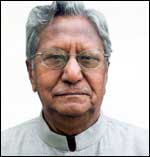
Vishwa Bandhu GuptaVishwa Bandhu Gupta
Former Additional Commissioner, Income Tax


The mounting public anger over the constantly increasing fuel prices is making New Delhi very nervous. Yet, it might seem that several important ministers in this government are suffering from some mental condition that compels them to repeatedly revert to the oil price issue much in the manner of a needle stuck on a cracked gramophone record.

First, in this year's Union Budget, Pranab Mukherjee hiked the prices of petrol and diesel, and then petroleum minister Murli Deora raised them even further. As if these were not enough, Manmohan Singh then went ahead and completely linked the price of diesel to international prices. This came after the PM had announced last June that he was not going to link diesel to international processes. The aam aadmi is at the receiving end of this blatant volte-face.

After fuel prices shot skywards, Opposition parties initiated a strike that hit normal life in the country for a few days. Schools closed down, businesses shut their doors and transportation ground to a halt with many flights and trains being cancelled. Even the nation's biggest trucking union sided with the strike, further complicating matters. But what the Opposition parties failed to do was call the government's bluff. The government was garnering Rs 100,000 crore as import and excise duties on gas and petroleum and subsidising Oil Marketing Corporations (OMCs) only to the extent of Rs 70,000 crore. If you take the gallon rate of petrol and diesel in American gas stations and convert that price into Indian rupees, the petrol rate comes to about Rs 37 per litre and the price of diesel to not more than Rs 24 a litre.

Governments the world over are doing their best to starve off fiscal deficit. India has taken to upping the cost of fuel to cover its overheads. The blunt truth is that it should bring down the import and excise duty for petrol and diesel to a near zero rate. The Indian people are being misled, cheated and completely lied to. The government covers the losses of OMCs but keeps silent about the nearly Rs 100,000 cash garnered by the ministry of finance. India's aam admi is being told the story of losses and not that of profits. The government might go to the extent of linking even cooking gas cylinders to international prices. The bottomline is that UPA-2 is working for the interests of big business. Petroleum price as quoted in the news generally refers to the spot price per imaginary 'barrel' (159 litres) of either WTI/light crude as traded on the New York Mercantile Exchange (NYMEX) for delivery at Cushing, Oklahoma, or of Brent as traded on the Intercontinental Exchange for delivery at Sullom Voe. The price of a barrel is dependent on both its grade, determined by factors such as its specific gravity or API and its sulphur content and its location. The vast majority of oil is not traded on an exchange but on an over-the-counter basis. Other important benchmarks include Dubai, Tapis, and the OPEC basket. The Energy Information Administration (EIA) uses the imported refiner acquisition cost, the weighted average cost of all oil imported into the US, as its 'world oil price'.

The demand for oil hinges on global macroeconomic conditions. According to the International Energy Agency, high oil prices generally have a large negative impact on global economic growth. Others argue that the run-up in oil prices over the past few years actually led to an acceleration in global growth. The huge surpluses built up by oil exporting countries were recycled through sovereign wealth funds and the banking system greatly increased investments in emerging markets and helped hold down interest rates in the US.

China's oil demand and growth may be making headlines, but the world's fifth-largest crude oil producer is undergoing decelerating growth in oil consumption and is more a price taker than a price driver, says a new report. Only 19 per cent of China's energy needs are met by oil and the country's oil dependence is weakening. China expects lower consumption growth due to economic rebalancing and efficiency improvements. Oil demand in the rich, industrialised countries of the West already appears to have peaked and the trend in developing economies is toward an ever-smaller increase in the amount of oil consumed for every extra unit of economic growth. In India we have failed to undertake basic oil price reforms. Do away with excise on hybrid vehicles of mass transportation, and lower taxes on such cars. Make Indian Railways run on electricity grids that consume little energy.

Oil prices, in future, given the current bad shape of OECD economies, can only fall and not rise. This was just not the time for increasing oil prices. Food inflation is running at 20% at wholesale prices and 90% people do not have full two-course meals to eat.

For More IIPM Info, Visit below mentioned IIPM articles.
INDIA'S BEST COLLEGES, INSTITUTES and UNIVERSITIES
IIPM BBA MBA Institute: Student Notice Board
Ragging rights and wrongs

Friday, February 04, 2011

Fans blame octopus for Holland's defeat in 2010 WC final

INDIA'S BEST COLLEGES, INSTITUTES and UNIVERSITIES

Rage against Paul
Thiruvananthapuram was witness to a unique protest last week. This time around the demonstration was against Paul, the octopus that predicted that Spain will beat Holland in the final of the 2010 World Cup Football held in South Africa.

Dutch fans converged on streets, carrying placards and shouting slogans against the psychic octopus. A group of youth, some wearing orange T-shirts, even carried a placard with the picture of Paul. Thomas Benanson, a die-hard Holland fan, who participated in the procession, said: 'The prediction of Paul led to the downfall of Netherlands in the final. They had reached this position without losing a single game in the tournament. The prediction must have knocked down players' confidence. That's why we protested against Paul.'

Benanson and friends had a strange companion to protest against Paul. Kerala's rationalists are up in arms against Paul, but for a different reason. Sreeni Pattathanam of Bharateeya Yuktivadi Sanghom said that Paul's prediction was nothing but commercialisation of superstition. 'The successful campaign of using Paul, proves one thing that human beings are intelligent enough to utilise a creature like an octopus for their gain,' said Sreeni.

V.A. Gireesh, journalist with a Malayalam newspaper attributes the youths' demonstration to Kerala society's over responsive nature. 'We are used to take out any issue to streets creating trouble to fellow citizens. If political parties can do this why can't a bunch of football lovers. That is how we react,' said Gireesh.

For More IIPM Info, Visit below mentioned IIPM articles.
Best Colleges for Vocational Courses in India
IIPM BBA MBA Institute: Student Notice Board

Monday, January 31, 2011

Students can now do engineering courses in Tamil language

Best Colleges for Vocational Courses in India

Mother tongue advantage

There is good news for students who want to read engineering courses in their mother tongue. Some colleges in the prestigious Anna University, Tamil Nadu, are offering Bachelor of Engineering Degree courses (Mechanical and Civil engineering) in Tamil language.

The courses have been a huge hit as some 99 students have chosen BE in Tamil. Mannar Jawahar, vice-chancellor of Anna university, told TSI: 'Civil engineering can be studied in Tamil in 11 colleges of Anna University and mechanical engineering in 12 colleges. In the next year we will expand this to other disciplines also.''

Mohanraj of Kavundanur in Namakkal district is the first student to take admission is such a course. 'I have no hesitation in studying engineering in Tamil. I may need to know English while seeking job. I can hone my language skills later on,'' he told TSI. Despite high score, Mohanraj opted for the course in Tamil because of his love for the language. Besides, he feels that it will be easy for him to master the subject.

But there are many who are not impressed. Dr. Kalanidhi, former vice-chancellor of Anna University, said: 'When a student studies technical courses in Tamil, he can understand the subject easily, but he cannot get jobs outside the state, not even in Bangalore. In some way he is handicapped. In Japan those who studied in Japanese are struggling. Are private companies in Tamil Nadu ready to give jobs to students who take Tamil as a language to study B.E?''

P.R.Subramaniam, a lexicographer from Mozhi trust, said: 'Imparting education in the mother tongue is good. But before that there are certain steps that each university should take. They should rope in subject experts who could easily translate books into Tamil. Besides, from time to time it should also be upgraded so that new changes are incorporated in the books.'' Also, he suggests students studying in Tamil to improve their knowledge of English so that it could help them get a job.

But Mannar is not worried. He said: 'Nothing to worry about. There are many job opportunities in civil and mechanical fields in the state. That is why we started teaching these courses in Tamil. We will make sure that books are updated every four years. Students who are taking the course in Tamil will also be guided in English language skills.''

For More IIPM Info, Visit below mentioned IIPM articles.
INDIA'S BEST COLLEGES, INSTITUTES and UNIVERSITIES
IIPM BBA MBA Institute: Student Notice Board

Saturday, January 29, 2011

HEALTH SECTOR: PUBLIC VS PRIVATE

INDIA'S BEST COLLEGES, INSTITUTES and UNIVERSITIES

End of healthcare boom?!?
Ruining public health services is no solution to solve healthcare prob
India's healthcare industry is growing at a rapid pace, with a growth rate of 12 per cent '' driven by higher life expectancy and income, along with transforming demographics, and arrival of life-style diseases vis-'-vis chronic ones! The healthcare market in India is expected to touch $70 billion in 2012 from being half of that in 2007. Mckinsey has approximated a figure of 315 million to be insured by the end of 2010 across the country, which otherwise would have to bear the grubby and sordid environment and substandard facilities of government health centers. No wonder there are one million casualties from curable diseases every year, with very little admittance to specialists, especially in the rural areas as 80 per cent of them have clamored in the cities. Only 400 million in our country can reach specialists portrays a very gloomy picture, leading to deaths or aggravation of diseases for the unfortunate rests. Not only specialists, there are shortages at every level in government hospitals with 24 per cent admitted are below poverty line. The expenditure on health is 4.9 per cent, of which government spends a meager 0.9 per cent with rest 4 per cent being private expenditure. The states involvement in providing standard medical facilities to its masses is even worse ' as a percentage of budgetary allocation its investment has fallen from 7 per cent in 1990 to 5.5 per cent at present. Consequently, India's availability of hospital beds is abysmally low, when the global average is 3.6 beds per 1000, India has shamefully 0.7 beds.

The government, since the last few decades has systematically broken the backbone of public sector healthcare facilities leading to mushrooming of private sector units. There is a comprehensive failure of our government in providing access to basic healthcare of our people. Out of 11,25,000 medical practitioners, only 1,25,000 are involved in public sector units. The urban rural divide is lopsided as well. The cities constitute 59 per cent of all health practitioners although majority of our population live in rural areas. 60 per cent of all doctors in Maharashtra live in Mumbai which comprises only 11 per cent of the state population. Having said government's apathy towards improving health facilities in rural areas, in 2009-10 annual budgets however it has announced an increase of Rs.40 billion.

Behind the glitzy settings of private sector demand for monetary splurge, through avoidable diagnostic treatments, surgeries and other unethical practices has made the patients staggering for fund. Almost all developed nations have an organized health system, with government contribution of 60 per cent to 100 per cent ' with only exception of the United States ' whose treaded path we are following. Before we sum it up, it must be noted that high-end private hospitals, who were charging exorbitantly from the patients blessed with cashless mediclaim; can no longer do it as private sector as well as public sector insurance companies have denied this facility in select cities (it will extended soon in other cities as well) marking the end of a 'healthcare boom' phase. We should not be following American example as 30 million of it's own population is refuted of any kind of medical insurance, with have and have-not gap is widest and ever increasing!

For More IIPM Info, Visit below mentioned IIPM articles.
Best Colleges for Vocational Courses in India
IIPM BBA MBA Institute: Student Notice Board

Tuesday, December 28, 2010

Master's voice: Discipline can't be imposed


IIPM Prof Rajita Chaudhuri: The New Age Woman

Corporal punishment can't be condoned but teachers need options to tame unruly students

SP Srivastava
Principal, DAV ACC Public School, Kymore, Katni

When I had joined school more than two decades back, circumstances and situations were altogether different from what things have become today. Earlier, students used to truly respect their teachers. Teachers used to command immense respect in the larger society as well. That was teaching's golden period. Since then, the society has undergone a tremendous transformation. Nowadays, the teacher-student relationship has become commercial. Teachers see a student more as a commodity than as a student. This statement, of course, cannot be held in generalisation as there are lot of teachers even these days who regard students as their responsibilities and who really care for their well-being. However, it is difficult to deny that moral values have changed now and nobody is unaffected by this wave of change. In our days those teachers who were stricter used to get more respect. Students could not even dare to complain about teachers to their parents.

Corporal punishment cannot be supported at all. Beating a child cannot solve his or her problems. However, there are certain things which need to be understood properly. For example, understanding science obviously demands an aptitude suited for the discipline. Parents force children to study science. The teacher understands that the student does not have the aptitude but he is helpless. As a result, he is compelled to force the student to study science more and in the process he might end up punishing him or her.

In our times, 'Spare the rod and spoil the child' was the universal truth. Nowadays, the concept has completely changed. Educationists agree that corporal punishment should not be condoned. I do agree with the point of view that physical punishment cannot do any good to any student. What is more important is to make a student realise his mistake. This can be done by other means too.

In a class of 50 to 60 students, it is certain that three to four students will be wild enough to destroy the atmosphere of the class. It is equally true that nobody can make them realise their mistakes, they are simply not ready to accept they are wrong. In such a situation, what should be the reaction from a teacher who is under immense pressure to finish the syllabus on time? These children enjoy at the cost of other students. Teachers must have options and alternatives to deal with such students. There are also students who take private tutions, they do not pay attention in class and thus destroy the quality time of other students. These days parents have become more possessive of their children as most have only one or two children. So they fear for their kids. They become more insecure. When they come to know that the teacher has punished their son/daughter, they immediately rush to the school and complain to the school administration. When a teacher is warned in front of parents he feels humiliated and later becomes indifferent to students. This is a scary scenario. The future of a child depends much on the taecher and if the teacher becomes indifferent to them, their overall growth suffers.

Incidents of corporal punishments are now widely reported in the media. There is hardly a day when we do not find such reports in newspapers or on the news channels. However, mediapersons fail to understand the gravity of the matter and they usually file biased reports in which the teacher is the perennial villain and the student the victim. They should go a bit deeper into the matter and should be able to differentiate on a case to case basis.

I feel, amidst the clamour for complete ban on corporal punishment, maintaining discipline in school is becoming increasingly problematic. Students, these days, are very smart. They know very well that teachers cannot punish them, he is teethless.

This situation encourages him to take undue advantage of the situation. Discipline cannnot be imposed, it comes from within. The need of the hour is to internalise the process of discipline and education simultaneously. Parents cannot shirk away from their responsibilities. They should devote time so that their children can share their feelings.

I fully accept that children should not be punished for silly reasons. Even the Central Board of Secondary Education has categorically stated that corporal punishment should be banned in schools.

But teachers must have options to tame unruly children.

I believe in positive action. Instead of beating the children, they can be asked to work in the garden or collect waste from the school campus. This way they will learn important lessons in life.

An Initiative of IIPM, Malay Chaudhuri and Arindam chaudhuri (Renowned Management Guru and Economist).

For More IIPM Info, Visit below mentioned IIPM articles.
IIPM BBA MBA Institute: Student Notice Board
Run after passion and not money, says Arindam Chaudhuri
Award Conferred To Irom Chanu Sharmila By IIPM

Prof Rajita Chaudhuri follow some off-beat trends like organizing make up sessions
IIPM Prof Rajita Chaudhuri's Snaps
IIPM Prof Arindam Chaudhuri on Our Parliament and Parliamentarians' Work

Thursday, November 18, 2010

KERALA FASHION: Iconic sari gets recognition


IIPM BBA MBA Institute: Student Notice Board

It is all the rage in Kerala and other places, including Delhi

Balaramapuram village is at the centre of attraction after Kerala’s iconic “Balaramapuram Sari’’ has received Intellectual Property Rights (IPR) protection through Geographical Indications Act (GI Act).

The village is extremely popular in the state for producing such a wonderful sari. Thousands of weavers make the traditional Kerala Kasavu Sari for women and Kasavu Mundu for men in off-white with golden borders in this six square kilometres textile land — near Thiruvananthapuram. They are designed to be worn specially on propitious occasions. According to industry sources, about 27,000 handlooms operate in the village to produce these saris. The weavers — shaliyar community — use traditional throw-shuttle pit looms, fly shuttle looms and make cotton fabrics with pure zeri (kasav) or coloured yarn.

Hundreds of families, including women, are fully involved in weaving these saris. More than 200 cooperative societies are active in this area. They are fully involved in the production and distribution of the products. The Balaramapuram textiles are sold throughout Kerala through Hantex, and the exclusive shops of zeri textiles like Kasavu Kada and Karal Kada. “We never depend on mechanised systems like dobby, jacquard and jala. The imagination of the weavers and the excellence in silver covering and the gold plating of the silk make Balaramapuram matchless. We have no professional designers and fashion consultants. Our clothes are pure eco-friendly and survive for long,’’ says B.AnilKumar, a weaver at Balaramapuram.

Balarampuram sari is famous for its varieties. One can select saris from the price range of Rs 500 to 40,000. The weavers say that the North Indians, especially Delhiites, are fond of these costly saris. The gold, silver content of the zari is the significant factor which adds the brand value of the Balaramapuram clothes. “The present protection under the IPR confirms its uniqueness,’’ says Anilkumar, a trader.

But most of the weavers are apprehensive about the special protection. Besides, they fear that the traditional art may die as youngsters are not joining the profession. Of late their biggest worry has been the arrival of mechanically produced Kasavu sari that is available in the market for only Rs 100. Since then, the Balaramapuram sari has been facing a stiff competition.

For more articles, Click on IIPM Article.

Source : IIPM Editorial, 2010.

An Initiative of IIPM, Malay Chaudhuri and Arindam chaudhuri (Renowned Management Guru and Economist).

For More IIPM Info, Visit below mentioned IIPM articles.
Run after passion and not money, says Arindam Chaudhuri
IIPM BBA MBA B-School: Rabindranath Tagore Peace Prize To Irom Chanu Sharmila
IIPM Prof Rajita Chaudhuri: The New Age Woman

IIPM’s Management Consulting Arm - Planman Consulting
Planman Consulting: The sister concern of IIPM
Planman Consulting
Social Networking Sites have become advertising shops

Friday, August 27, 2010

Winning: the Mirchi way

In the recent Indian Readership Survey (IRS) 2009, R2, Radio Mirchi emerged the clear leader with over 46.5 million listeners. However, Big FM despite having the largest number of radio stations in its kitty, continues to lag behind the leader and the first mover in the private radio space Radio Mirchi.

Even in the eight key markets (of Mumbai, Delhi, Kolkata, Hyderabad, Bangalore, Pune and Ahmedabad ), Radio Mirchi leads with the largest cumulative listenership of 15.4 million. Red FM follows with 7.2 million listeners. Sujata Bhatt, EVP, Strategy and Marketing, Radio Mirchi said, “We welcome the IRS, R2 data .Our lead over the next player is still 128% higher – more than double! We are the clear No.1 in the top 8 cities.” The IRS is the only source of radio listenership that gives a fairly accurate measure of national reach and listenership. The R2 round also indicates that listenership leads of Mirchi are stable and listenership numbers of others who followed the footsteps of Radio Mirchi are slowly but steadily stabilising.

Tapas Sen, Chief Programming Officer, Radio Mirchi added, “I am thrilled to see the IRS R2 results. It is a thumping endorsement of our mood based programming strategy which has obviously gained wide consumer acceptance.” The results clearly reiterate Radio Mirchi’s leadership in the segment.

Pallavi Srivastava

For more articles, Click on IIPM Article.

Source : IIPM Editorial, 2010.

An Initiative of IIPM, Malay Chaudhuri and Arindam chaudhuri (Renowned Management Guru and Economist).

For More IIPM Info, Visit below mentioned IIPM articles.
IIPM enters into media education
IIPM makes record 10,000 placements in five years
TSI exposes b school ranking scamsters Mahesh Peri of Career 360 and Premchand Palety of C fore. - For Complete Sting Operation Video Click Here
IIPM Related Links

Detail of all IIPM branches

IIPM - Admission Procedure
IIPM, GURGAON

IIPM 3-year full-time Integrated (MBA BBA) Programme
IIPM 2-year full time Programme (leading to the award of the MBA degree from IMI)
Social Networking Sites have become advertising shops

Thursday, July 15, 2010

Through the frosted glasses in Daizo Ito’s swanky office in Gurgaon, one can clearly see the growth and chaos bustling in and around Gurgaon.

But an unconcerned Ito is focused on only one thing: how to convert the Japanese behemoth’s missed chance in India into an opportunity to make Panasonic a trusted household name in the country. By Aditi Prasad

The thrilling World Baseball Classic (WBC) finals held at Los Angeles’ Dodger Stadium earlier this year saw Japan and Korea slug it out for the title, with underdog Japan winning the championship on the back of the team’s super pitching form. Some commentators believe that the photo finish WBC event irrevocably established that baseball was no longer just an American game. But for some others like Daizo Ito, Panasonic India’s Chief Executive, it signified much more than that viz. the curious case of the Indian consumer durables market where Koreans monopolise the segment at the cost of global Japanese heavyweights like Panasonic. Japan beat favourites Korea in the WBC finals, and Ito now has a plan, if not to beat, then at least, join the ranks of the Korean biggies in India’s Rs.26,000-crore durables market.

“We are no longer pussy cats, but hungry tigers,” Ito avers, with a roar, his towering personality almost dwarfing his swank cabin in Panasonic India’s premises at Gurgaon. For those who came in late, Panasonic was one of the first consumer durable companies to have spotted the India opportunity way back in the 90s, much before LG and Samsung soared into the limelight. In Ito’s own words, when he was sent by Chairman Nakamura to take charge of Panasonic’s India operations 18 months ago, he was “shocked” to see Panasonic languishing near the bottom, at 16th position in brand awareness among all its rivals. “In most other Asian countries, we are at the number 1 or 2 positions competing with either Sony or Samsung,” he laments.

Not that the big guys at the company headquarters in Japan were caught napping. Instead, all these years, Panasonic had been merely looking at China as their big growth engine. With the result that today, China contributes almost 8% to Panasonic’s global turnover; while India’s share stands at an embarrassing less than 1% of the behemoth’s global revenues. Ito however is in town to challenge status quo. Reputed somewhat as a turnaround man within Panasonic, the man has, to his credit, turned around the fortunes of Panasonic UK and has also taken his company to the number one position in Thailand over the last few years. Now his eyes are fixed on India. “Panasonic’s 100th anniversary is in 2018 and my gift to our headquarters on that occasion will be to make Panasonic India a stark success,” he avers smilingly. Ito has already got off to a good start. The last year has seen Panasonic jump from relative obscurity to right under the floodlights, courtesy a big budget marketing blitz with a host of ambassadors, including the new heartthrob Ranbir Kapoor and even the Bachchan father-son duo for their ECO initiative.

For more articles, Click on IIPM Article.

Source : IIPM Editorial, 2010.

An Initiative of IIPM, Malay Chaudhuri and Arindam chaudhuri (Renowned Management Guru and Economist).

For More IIPM Info, Visit below mentioned IIPM articles.
IIPM enters into media education
IIPM makes record 10,000 placements in five years
TSI exposes b school ranking scamsters Mahesh Peri of Career 360 and Premchand Palety of C fore. - For Complete Sting Operation Video Click Here

Pioneer Exposes the fraud called Mahesh Sharma and Mahesh Peri of Career 360 and Barbel Schwertfeger of mba-channel.com
IIPM: An intriguing story of growth and envy
Prof Arindam Chaudhuri of IIPM on MF HUSAIN‎
IIPM Related Links

Detail of all IIPM branches

IIPM - Admission Procedure
IIPM, GURGAON

IIPM 3-year full-time Integrated (MBA BBA) Programme
IIPM 2-year full time Programme (leading to the award of the MBA degree from IMI)

Monday, June 21, 2010

With hope, all the way

December 7, 2009 will witness world leaders from 192 countries gather at Copenhagen to attend the most coveted conference – the United Nations Climate Change Conference. The conference will supposedly decide the future of our planet, which may go into oblivion if a definite framework on limiting carbon emissions before the expiry of Kyoto protocol is not formulated. UN, in its endeavour to connect with the general public, has devised a cause-related campaign with the leading ad agencies of the world (including O&M, McCann Worldgroup, Euro RSCG, MPG, Draft FCB, Tribal DDB, Colle+McVoy, Saatchi & Saatchi, Digitas, Interbrand) by the name of Hopenhagen, which signifies a more hopeful way of living in the future without any adverse effects of global warming. Seems that the mantra of hope propagated by US Prez Barack Obama will find solace in all the major ‘changes’ taking place in the world.

For more articles, Click on IIPM Article.

Source : IIPM Editorial, 2010.

An Initiative of IIPM, Malay Chaudhuri and Arindam chaudhuri (Renowned Management Guru and Economist).

For More IIPM Info, Visit below mentioned IIPM articles.
TSI exposes b school ranking scamsters Mahesh Peri of Career 360 and Premchand Palety of C fore. - For Complete Sting Operation Video Click Here

Pioneer Exposes the fraud called Mahesh Sharma and Mahesh Peri of Career 360 and Barbel Schwertfeger of mba-channel.com

IIPM: An intriguing story of growth and envy
Prof Arindam Chaudhuri of IIPM on MF HUSAIN‎
IIPM Related Links
IIPM - Admission Procedure
IIPM, GURGAON

IIPM 3-year full-time Integrated (MBA BBA) Programme
IIPM 2-year full time Programme (leading to the award of the MBA degree from IMI)
Exclusive In chat with Society Magazine - Prof. Arindam Chaudhuri

Tuesday, June 01, 2010

IT’S NEO, IT’S NOW!

And the good start of the ODI tournament reflects that the channel’s efforts have worked. As per aMap, the fourth India-Australia ODI got a TRP of 2. Neo Sports’ Marketing Head Abhishek Verma, says, “We are very happy with the initial response to the tournament. And these are aMap ratings… The TAM ratings for cricket matches are generally double of that of aMap. Moreover, as it is becoming a close fight for the series we are expecting an average TAM ratings of 8-9 points for the entire tournament. The advertisers’ response to the tournament has also been good. Neo Sports got eight sponsors on board, including brands like Hero Honda, Tata DoCoMo, Gillete et al. In fact, DoCoMo has joined in as a sponsor for the entire six month season on Neo cricket The ad rates are Rs.3.5 lakh for a 10-second slot for bulk buyers and for usual buyers, it is Rs.4 lakh. This is at-par with the much hyped IPL 2 ad-rates. When quizzed about the warm response from advertisers for the Hero Honda Cup despite the recent bad performance of cricketing events on TV, a media planner said, “Any India playing cricket attracts eyeballs. That’s why bilateral tournaments with India get a very high rating and wider reach, compared to a tournament or a Twenty20 cricket (excluding IPL). This is because there is no fear of India getting knocked out. And that’s why advertisers are excited about the India-Australia series.” Neo cricket is expecting Rs.150 crore revenues from the ongoing HH Cup alone. For the six month long season the channel expects ad revenues approximating to Rs.500-600 crore. This figure is close to 40% of the entire advertising spend on cricket in a year (Rs.1300-1500 crore).

But the question is with channels like ESPN (seasoned in sports broadcasting globally) and SETMAX (that has some of the hottest cricket properties), will a two year-old channel like Neo cricket be able to make a space for itself? On the face of it, this may look like a herculean task, but Neo has been doing well on the back of the telecast rights for all international and domestic cricket played in India. In fact, the channel became the most watched sports channel in 2008, with a market share of almost 28%.

And keeping in mind India’s fascination for cricket (at least when the Men in Blue are around), Neo is sitting on a gold mine... at least till it owns those telecast rights!

For more articles, Click on IIPM Article.

Source : IIPM Editorial, 2010.

An Initiative of IIPM, Malay Chaudhuri and Arindam chaudhuri (Renowned Management Guru and Economist).

For More IIPM Info, Visit below mentioned IIPM articles.
TSI exposes b school ranking scamsters Mahesh Peri of Career 360 and Premchand Palety of C fore. - For Complete Sting Operation Video Click Here

Pioneer Exposes the fraud called Mahesh Sharma and Mahesh Peri of Career 360 and Barbel Schwertfeger of mba-channel.com

IIPM: An intriguing story of growth and envy
Prof Arindam Chaudhuri of IIPM on MF HUSAIN‎
IIPM Related Links
Detail of all IIPM branches
IIPM - Admission Procedure
IIPM, GURGAON

Exclusive In chat with Society Magazine - Prof. Arindam Chaudhuri

Monday, May 17, 2010

When Spin Doctors give the PR Push

How different it is to build a political brand as compared to a corporate brand through PR activation? Well, it’s similar... but not identical!

It was during April-May this year that all of us were subjected to the frenzy created by the political parties and their choice of leaders in a run up to General Elections. Political posters, advertising spots, hurried activities and flurry created by rallies screamed all through the day to ‘vote-for-me’ pleading candidates. The distorted images of leaders wrestled for attention, holding onto the voters’ index finger. A while later you found yourself in the ballot booth, conscious of the fact that your vote counts, though subconsciously sending off similes of candidates who successfully incarcerated your attention.

Yes, welcome to the world of ‘undeciders’! And being in this special ‘undecided’ category, you happen to prove all exit polls wrong and make the unthinkable happen. You end up voting for a candidate who has been able to communicate his achievements effectively. The man, or the woman, you voted for may be as good as the competition, but he or she has scored in terms of efficiently and effectively communicating with the buyer; read voter in this case. The situation at a hyper-market is so much alike. Building a political brand is similar to building a consumer brand – similar, but not identical. To build a consumer brand, a product is needed to position against a target group. A political brand, on the other hand, is developed to strike functional and emotional values to an electorate despite the difficulty of defining the market place. The single most distinction towards PRable communication between a consumer brand and a political brand is the ‘value proposition on offer’ around which a consumer brand is built. A political brand is positioned on the basis of the history of the political party, credentials of the political leader and the character that is to be highlighted on the block. These three fundamentals of communication for a political brand make it a tad complex over a consumer brand. The political brand must signify party lineage ably supported by credible manifestos and policies. The party’s credibility typically has a huge rub off on the positioning of an individual leader. Similarly, soiled reputation of a colleague on the political brand can hamper the desired image. There are often multiple opposing brands in one party, more so for Indian electorate where allies come together to form a ruling party or an opposition. For instance, the Congress has a certain brand image and equity, and its allies and political leaders have their own brand image. The PR strategy needs to inculcate such details, especially while positioning a leader at constituency level. For a consumer brand, the brand positioning is devoid of sub-brands and complicated alliances. The attributes of a consumer brand reach out to a specified target audience nationally.

With the evolution of media sphere and increased public scrutiny, corporates and politicians alike are under intense pressure to act transparently and hence the need to communicate. PR perhaps gives them the edge on any other medium to communicate effectively to the target audience, as PR places exposure through third party endorsements and brings about credibility. While PR communication for a consumer brand is more forthright and is based on key characteristics, a political brand is more focused on building an emotional quotient with the target audience. In western countries, Political PR is often referred to as spin doctoring. While the term spin doctors may have some negative connotation, it essentially includes selectively presenting facts and quotes that support one’s position. Spin doctoring carefully times the release of certain news so it can take advantage of prominent events. In India, while Consumer PR has evolved to a large extent, Political PR is still carried on a selective basis with the sole intent of managing media exposure during the election process. However, with PR coming of age, it is only time that political PR will gain ground and be a part of the political team at a more strategic level.

For more articles, Click on IIPM Article.

Source : IIPM Editorial, 2010.

An Initiative of IIPM, Malay Chaudhuri and Arindam chaudhuri (Renowned Management Guru and Economist).

For More IIPM Info, Visit below mentioned IIPM articles.

The Sunday Indian:- B-SCHOOL RANKING SCAMSTERS EXPOSED!
For Exclusive Footage by Sunday Indian Click Here

Outlook Magazine's B School Ranking Scam Exposed
Don't trust the Indian Media!
IIPM exposes Career 360 and Mahesh Peri scam
IIPM - We will change your outlook : Career 360 and Mahesh Peri scam is exposed

IIPM: An intriguing story of growth and envy
Prof Arindam Chaudhuri of IIPM on MF HUSAIN‎
IIPM Related Links
IIPM 3-year full-time Integrated (MBA BBA) Programme
IIPM 2-year full time Programme (leading to the award of the MBA degree from IMI)
B-schools expect higher rate of campus placements this year
Exclusive In chat with Society Magazine - Prof. Arindam Chaudhuri

Monday, April 26, 2010

Can Piaggio ride faster?

As per the latest reports, Piaggio has plans to launch brands like Gilera, Aprilia and Derbi (a small motorcycle), alongwith the much-popular Vespa brand. “If Piaggio will enter the Indian two-wheeler market, the Vespa brand will definitely be there. But it’s too early to talk about the other possible brands,” adds Chopra. But what convinces Piaggio to mark a re-entry after a long 10 years? “The Indian two-wheelers market is one of the fastest growing after China in the world. Moreover, its attractiveness ensures that competition will get all the more intense going forward,” shares the market leader’s top honcho, Shinji Aoyama, President & CEO, Honda Motorcycle & Scooters India limited (HMSI). HMSI enjoys more than 50% market share in the scooters segment. When quizzed on his vision for the two-wheeler market, Piaggio’s Chopra agreeingly states, “We at Piaggio see a huge opportunity in the Indian two-wheeler market and we would not like to miss out on the same.” As per industry sources, the company will be manufacturing two-wheelers at its manufacturing plant at Baramati, Maharashtra, where its three-wheelers are currently being manufactured.

In fact, Piaggio is also equally bullish on the three-wheeler segment and it plans to roll-out variants in petrol, CNG and LPG by end-2009. “We pioneered the LCV segment in the country and we are the market leader despite the fact that there was a big market that Piaggio wasn’t catering to,” avows Chopra. The company is also planning to launch a mini truck – a half-tonne 4-wheeled truck by early 2010. But the biggest task would be to win the consumer’s trust when it comes to the two-wheeler segment for Piaggio. The company will have to spend bigger bucks to ensure closer ties with the consumer. The already comfortable position of Piaggio in the three-wheeler segment, will help the company in both the branding and distribution aspects.

However the top spot in the scooter segment for now surely remains a distant dream for Chopra, as the situation now is a whole lot different to what it was back in the 90s. Can Vespa make this ride easier? For now, your guess is as good as ours!

For more articles, Click on IIPM Article.

Source : IIPM Editorial, 2010.

An Initiative of IIPM, Malay Chaudhuri and Arindam chaudhuri (Renowned Management Guru and Economist).

For More IIPM Info, Visit below mentioned IIPM articles.

The Sunday Indian:- B-SCHOOL RANKING SCAMSTERS EXPOSED!
For Exclusive Footage by Sunday Indian Click Here

Outlook Magazine's B School Ranking Scam Exposed
Don't trust the Indian Media!
IIPM exposes Career 360 and Mahesh Peri scam
IIPM - We will change your outlook : Career 360 and Mahesh Peri scam is exposed

Prof Arindam Chaudhuri of IIPM on MF HUSAIN‎
IIPM Related Links
IIPM ISBE Programmes
Follow Arindam Chaudhuri on Twitter
IIPM B School on Twitter
Exclusive In chat with Society Magazine - Prof. Arindam Chaudhuri

Saturday, April 10, 2010

WESTERN UNION


IIPM: An intriguing story of growth and envy

GOAL: To deliver a consumer intent increase of 25% and transaction increase of 15% for the company.

STRATEGY: To bridge the gap between family and the earner (who is abroad) on special occasions and festivals.

CHALLENGE: With Chennai being single largest market in India, the task was to develop a different brand identity in order to differentiate and position it as a service that delivers beyond functional benefits.

IMPLEMENTATION: On Pongal, WU created a unique consumer touchpoint: LIVE ON RADIO phone call to a loved one abroad and also an SMS exchange of both phone numbers. Next, a 15-day promotional blitz invited participation using spots on FM channel Hello along with on-ground mall engagement.

EFFECTIVENESS: The campaign reached out to 1.1 million people, with over 5,000 families connected via phone and 100 of those connected live on the radio. WU transactions for the quarter grew at around 24% versus the same quarter year ago. It also garnered a 43% increase in ‘Preference & Intent’ levels for the WU brand in Chennai.

Neha Saraiya

For more articles, Click on IIPM Article.

Source : IIPM Editorial, 2010.

An Initiative of IIPM, Malay Chaudhuri and Arindam chaudhuri (Renowned Management Guru and Economist).

For More IIPM Info, Visit below mentioned IIPM articles.

The Sunday Indian:- B-SCHOOL RANKING SCAMSTERS EXPOSED!
For Exclusive Footage by Sunday Indian Click Here

Outlook Magazine's B School Ranking Scam Exposed
Don't trust the Indian Media!
IIPM exposes Career 360 and Mahesh Peri scam
IIPM - We will change your outlook : Career 360 and Mahesh Peri scam is exposed

Wednesday, March 17, 2010

Music is no longer a priority but their ratings are zooming northward. Gross Rating Points grew 150% in 2009

and over the last three years, the channel has been growing consistently by over 100%.

Ninteen year old Anchit, a second year B. Com student at Delhi University, is single-mindedly focusing on becoming a Roadie. He has been appearing at the show auditions for two consequetive years now, but has not been able to make it so far. The failed attempts, however, have not discouraged Anchit’s spirit to live his dream. “I am sure next year I will clear all the rounds and become a Roadie. I will prove myself,” he resolutely told 4Ps B&M.

And there are millions of Anchits out there. Their biggest aspiration in life is to become a Roadie. Just click on the Orkut community for the seventh season of Roadies (auditions to go on-air in November 09’) and you can see for yourself the cult following for the show. It’s not just about the over 90,000 registered members, but go through the discussions and polls and you realise that becoming a Roadie is considered the single most significant achievement here. It’s coveted! It’s a badge! A status symbol! And so is Hero Honda Karizma! In the show, the Roadies take their respective Karizma through grueling terrains, harsh weather conditions and of course their own impatience… What started as a unique publicity campaign woven on travel and youth is now reaping rich dividends for India’s largest bike maker. Adds Anil Dua, SVP-Sales & Marketing, HH, “We have doubled volumes and market share in the premium segment in the last two years.” Incidentally, Karizma is the most aspirational bike in HH’s portfolio.

The best part is that MTV’s marketing success stories are no longer linked to just Roadies or Karizma. More and more marketers are putting their bucks where their mouth is and are showing more trust in MTV when it comes to engaging consumers. Last few years have seen a slew of ‘branded’ reality shows on MTV including Vodafone Splitsvilla, Airtel Connected, Pulsar Stuntmania, Kurkure Rock On, Kingfisher Fast & Gorgeous and so on. Today, when marketers think MTV, they certainly seem to think beyond the 30-second spot! Take the channel’s latest hit Pulsar Stuntmania. The show got an average TRP of 0.8 which is impressive keeping in mind that big ticket reality shows on GECs get an average TRP ranging between 1-3 points. What’s more impressive however are the results for the Pulsar bike, which has registered a 30% jump in sales after the show’s launch. An elated Milind Bade, GM Marketing (two wheelers), Bajaj Auto says, “We are in for the second season of Pulsar Stuntmania…The work is in progress. We are just giving it some breathing space but we will be on air again, some time next year…” And that statement brings us to another interesting fact. Most such engaging and compelling marketing associations on MTV have been going on for years. Pepsi Youth Icon has been around for 10 years, Hero Honda Roadies is entering its seventh year and Splitsvilla is preparing for its third season. And why not? Unlike the general pattern on Hindi General Entertainment Channels (GEC’s) where subsequent season TRPs are lower than the previous one; many reality shows on MTV have been doubling their ratings season after season. The season’s average rating for Roadies 6 was 3.11 – more than double the ratings for Roadies 5 (1.5). Similarly, the season average of Splitsvilla doubled from 0.65 in Season 1 to 1.5 in season 2. “Big time youth appeal and a strong connect with the target audience is what makes MTV really tick,” says Naresh Gupta, EVP Planning, Publicis India.

For more articles, Click on IIPM Article.

Source : IIPM Editorial, 2010.

An Initiative of IIPM, Malay Chaudhuri and Arindam chaudhuri (Renowned Management Guru and Economist).

For More IIPM Info, Visit below mentioned IIPM articles.

The Sunday Indian:- B-SCHOOL RANKING SCAMSTERS EXPOSED!
For Exclusive Footage by Sunday Indian Click Here

Outlook Magazine's B School Ranking Scam Exposed
Don't trust the Indian Media!
IIPM exposes Career 360 and Mahesh Peri scam
IIPM - We will change your outlook : Career 360 and Mahesh Peri scam is exposed

IIPM Related Links
IIPM - Admission Procedure
IIPM, GURGAON

IIPM 3-year full-time Integrated (MBA BBA) Programme
IIPM 2-year full time Programme (leading to the award of the MBA degree from IMI)
Arindam Chaudhuri's Portfolio - he is at his candid best by Society Magazine

Tuesday, March 02, 2010

‘Let go’ in this festive season

Is consumption environmentally unfriendly? Is that why austerity is being proposed? Not really. Organic foodstuffs are more expensive than ordinary fare just as environmentally clean solar power is more expensive than dirty power from coal. The supposed positive relationship between consumption spending and the carbon footprint is tenuous – junk food and environmentally unsound material can often be consumed in large amounts since they are cheap. So consumers should not confuse austerity with sustainability or with responsible behaviour.

There are of course many, as I have already mentioned, for whom austerity is imposed by the slimness of their pay packets compounded by the recent steep rise in the prices of essentials. The communal way of life offers an escape for them – getting together for community festivities, complete with decorations and self cooked food instead of the expensive gaiety of restaurants and private fireworks. Not only do riches not always make you happy, you do not have to be rich to be happy. Our festivals are a time for social interaction which is not only cost-less but allows one to afford trappings – good food, lighting, fireworks – that solitary efforts cannot.

To summarise, I would advocate a “festival as usual” approach. If you have a lot and feel ashamed to spend it all on yourself, then spread the merriment around. You can remain “green” while consuming and also not go green with guilt – one man’s spending is another man’s income. If you do not have enough, think of grand festive alliances instead of austere seclusion. Do not kiss your festive inclinations goodbye. The show must go on.

For more articles, Click on IIPM Article.

Source : IIPM Editorial, 2010.

An Initiative of IIPM, Malay Chaudhuri and Arindam chaudhuri (Renowned Management Guru and Economist).

For More IIPM Info, Visit below mentioned IIPM articles.

The Sunday Indian:- B-SCHOOL RANKING SCAMSTERS EXPOSED!
For Exclusive Footage by Sunday Indian Click Here

Outlook Magazine's B School Ranking Scam Exposed
Business Standard Exposes the Outlook Magazine Money Editor
Don't trust the Indian Media!

IIPM ISBE Programmes
Follow Arindam Chaudhuri on Twitter
IIPM B School on Twitter
Management guru Arindam Chaudhuri’s latest blockbuster book, Discover The Diamond In You

IIPM - Admission Procedure
IIPM, GURGAON

IIPM 2-year full time Programme (leading to the award of the MBA degree from IMI)
B-schools expect higher rate of campus placements this year
IIPM B School : King Khan, Bollywood Badshah and Quiz Wiz — that’s Shah Rukh Khan for you

Friday, February 19, 2010

A DAY IN THE LIFE OF TOI...


IIPM 3-year full-time Integrated (MBA BBA) Programme

India Poised, Lead India, Teach India to Let’s make this Vote Count in 2009, TOI has transformed its ‘information’ brand imagery to one of ‘empowerment’ over the last three years, says Pallavi Srivastava...

But ask Rahul Kansal, Brand Director, The Times of India (TOI), about TOI’s marketing initiatives in the last three years and he is quick to explain that content remains king for this 171 year old brand. “Marketing is secondary. For us, content is most important. Nearly 90% of our efforts go into improving content regularly, to make it engaging for readers,” says Kansal. And if that sounds a tad too pat coming from the brand head of an organisation that unabashedly celebrates marketing in its success, simply consider the manner in which the daily has consistently changed form and design to keep pace with its rapidly evolving target audience. Starting from the mid nineties, it transcends initiatives like more colour on TOI pages, leaner look, celeb columns and juicy Page One stories that interest and involve the youth - India’s fastest growing demographic. “We moved away from overdose of policy and politics and included lifestyle based news,” adds Kansal. With the result that today, TOI leads the charge among all English dailys in India with a total readership of 13.3 crore (as per IRS 2008).

TOI launched its first TV campaign in 1998 titled ‘A day in the life of India’. Campaigns, launched in the last few years, like Lead India and Teach India have not just allowed TOI to hog premium positioning as market leader, but the accompanying ground activation has kept the masses engaged with the brand like never before. Yet, Kansal says that their marketing budget over the last year has been just Rs.10 crore. He explains the reason as the heavy focus on print and outdoor ads in their campaigns. “For us, swearing to the idea is more important and that makes it effective,” he adds. Take for example, Teach India campaign that was rolled out in August 2008. TOI invited volunteers to take out some time from their routine to teach poor kids. The campaign got a massive response, with over 95,000 volunteers coming forward to take on the job. In July this year, a second round of applications for Teach India were invited and it netted about 30,000 additional volunteers.

Kansal asserts, “We don’t want ourselves to play the role of a passive provider of news. to our readers. We want to be a facilitator. We want to empower our readers to play a larger role in the making of a new India.” And that’s precisely what the future from Brand TOI is going to look like viz. making TOI readers connect to their “Idea of India” that is...

Shivanandan Pare
COO, Bigadda

“It is difficult for me to imagine India without Times of India for the basic fact that it is one of the oldest and most credible brand when it comes to news for the masses. It has given us brands like R.K. Laxman’s common man. it is impossible to imagine the daily without laxman’s cartoons. i associate TOI to a newspaper for india’s common man. Times of India is more of a habit in an average Indian’s life.”

For more articles, Click on IIPM Article.

Source : IIPM Editorial, 2010.

An Initiative of IIPM, Malay Chaudhuri and Arindam chaudhuri (Renowned Management Guru and Economist).

For More IIPM Info, Visit below mentioned IIPM articles.

The Sunday Indian:- B-SCHOOL RANKING SCAMSTERS EXPOSED!
For Exclusive Footage by Sunday Indian Click Here

Business Standard Exposes the Outlook Magazine Money Editor
Don't trust the Indian Media!

IIPM ISBE Programmes
Follow Arindam Chaudhuri on Twitter
IIPM B School on Twitter
Management guru Arindam Chaudhuri’s latest blockbuster book, Discover The Diamond In You

IIPM 2-year full time Programme (leading to the award of the MBA degree from IMI)
B-schools expect higher rate of campus placements this year
Arindam Chaudhuri (IIPM Dean) – ‘Every human being is a diamond’
IIPM Best B School – EVENTS
IIPM conceptualized the grand final of Dare ‘10 — the most prestigious of international B-school student quizzes
IIPM B School : King Khan, Bollywood Badshah and Quiz Wiz — that’s Shah Rukh Khan for you

Friday, February 05, 2010

Brand Performance


What Microsoft has done to jump to No.4 in this category. Read on to find out

The most prominent entry to this coveted list is that of Microsoft.

Absent last year, Microsoft has jumped straight to the fourth position. Brand Performance increased becasue Microsoft focussed more on the ‘right retail outlets’ in India tying up with big organised players like Staples, Chroma, Reliance et al, which offered it greater shelf space and therefore greater visibility.

Microsoft also brought forth a fusion of style and science. Other new entrants are SBI, Infosys and HDFC. Even though the prevailing high interest rates proved to be a damp squid for SBI & HDFC, they came out as the ultimate winners thanks to the special home loan schemes the duo offered. What’s more, the moment RBI cut rates, both SBI & HDFC were quick to follow suit.

For more articles, Click on IIPM Article.

Source : IIPM Editorial, 2010.

An Initiative of IIPM, Malay Chaudhuri and Arindam chaudhuri (Renowned Management Guru and Economist).

For More IIPM Info, Visit below mentioned IIPM articles.
Follow Arindam Chaudhuri on Twitter
IIPM B School on Twitter
Management guru Arindam Chaudhuri’s latest blockbuster book, Discover The Diamond In You
IIPM 3-year full-time Integrated (MBA BBA) Programme
IIPM 2-year full time Programme (leading to the award of the MBA degree from IMI)
B-schools expect higher rate of campus placements this year
Arindam Chaudhuri (IIPM Dean) – ‘Every human being is a diamond’
IIPM Best B School – EVENTS
IIPM conceptualized the grand final of Dare ‘10 — the most prestigious of international B-school student quizzes